
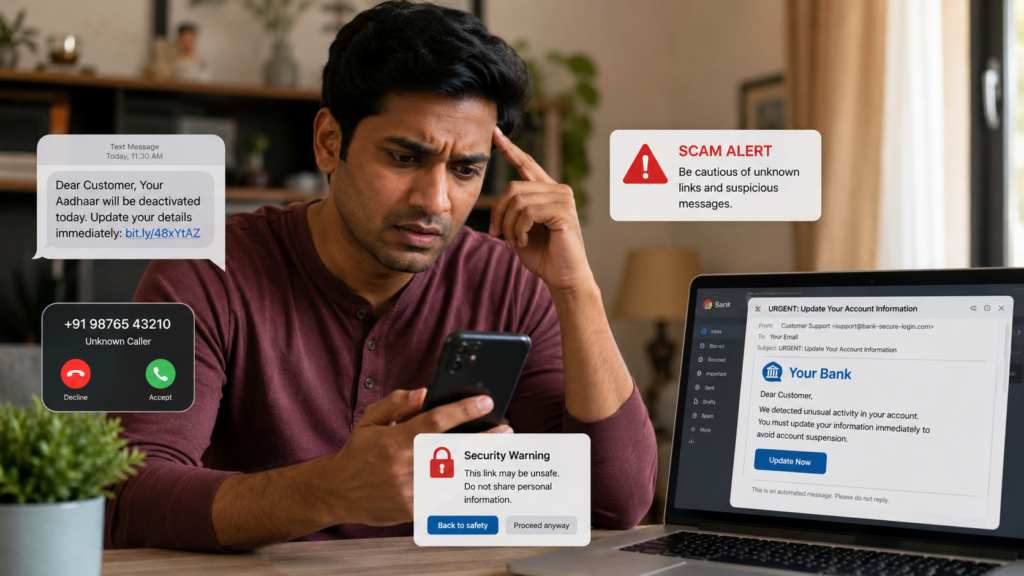
A few years back, most people were not very worried about cyber fraud. But now, almost every week we hear someone saying they got a fake call, suspicious message, or lost money after clicking a link. Since online payments and mobile banking have become normal in daily life, these frauds are also increasing.
Many people have heard terms like phishing, vishing, and smishing, but honestly, not everyone knows what they actually mean. The names may sound technical, but the scams are something very ordinary people face every day.
Phishing
Phishing is the kind of fraud that usually happens through email. A person gets a message that looks genuine — maybe from a bank, shopping website, or even a payment app. Everything may look normal, so the person doesn’t suspect anything.
Suppose someone receives an email saying their account has been locked and they need to log in again. There is a link in the email, and once they click it, a website opens that looks almost exactly like the original one. Most people won’t notice anything strange. They enter their details, and that is where the fraud happens.
The scary part is that sometimes these fake pages look so real that even careful people can get confused.
Vishing
Vishing is basically the same fraud but through a phone call. This has become very common, especially in India. Sometimes the caller says they are from the bank, sometimes from customer care, and sometimes they pretend to be calling from some government office.
What usually happens is they speak in a very serious tone. They may say your ATM card will stop working, or your KYC is not updated, or some transaction is blocked. Because they speak confidently, many people trust them.
I think this type of scam works a lot because when someone talks directly on call, it feels more real than a random message.
Smishing
Smishing is when fraud happens through text messages. You may have seen messages like “Your parcel is waiting for delivery” or “Your bank account has been suspended, update now.”
Most of us receive such SMS and delete them, but sometimes the message looks genuine enough to make someone curious. The link opens a page asking for details, or sometimes it downloads something harmful on the phone.
A lot of people click just to check what it is, and that is exactly how scammers trap them.
What’s the Difference?
To be honest, all three are almost the same type of scam. The only real difference is the way the fraudster reaches you.
- Phishing comes through email
- Vishing happens through calls
- Smishing comes through SMS
No matter the method, the aim is simple: to trick someone into sharing information.
How People Can Avoid It
There is no complicated rule to stay safe. In many cases, simple common sense helps a lot.
If someone asks for OTP, card number, CVV, or password, it is a warning sign. No genuine bank usually asks for such details on call. Also, if a message says something urgent and asks you to click a link immediately, it is better not to trust it.
Sometimes people lose money not because they are careless, but because the scammer creates panic. In that moment, they act quickly without verifying.
Final Thoughts
The internet has made life easier, but it has also created new ways for fraud. Phishing, vishing, and smishing are just different names for scams that target ordinary people.
The problem is that these scams do not always look fake. That’s why awareness matters. If something feels unusual — whether it’s an email, call, or message — taking a few extra seconds to think can prevent a big loss. Sometimes that small pause is all it takes to stay safe.