
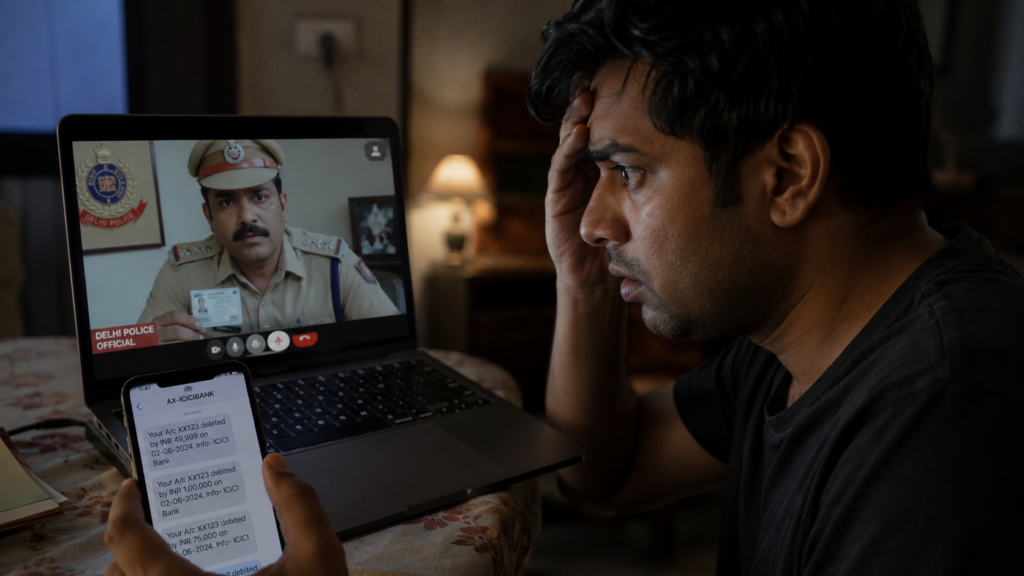
A few years ago, most online scams were pretty simple. People received fake lottery messages, suspicious links, or calls asking for OTPs. But now cyber frauds are becoming much more sophisticated and psychologically manipulative.
One scam that has suddenly become very common in India is the so-called “digital arrest scam.”
The scary part is that many victims are educated people — business owners, professionals, students, even retired individuals. A lot of them never imagined they could fall for something like this.
The reason is simple: these scams are designed to create fear first and confusion later.
So What Exactly Is a Digital Arrest Scam?
To be honest, the term itself sounds official, which is exactly why scammers use it.
In reality, there is no legal concept officially called “digital arrest” in Indian law. Fraudsters basically made up the term to scare people.
Usually, the victim receives a phone call from someone pretending to be:
- a police officer
- a cyber crime official
- a CBI officer
- a courier company representative
- a telecom department employee
The caller then says something alarming.
Sometimes they claim your Aadhaar card was used in illegal activities. Sometimes they say your bank account is linked to money laundering. In other cases, they may tell you a parcel sent in your name contains illegal items.
Most people panic the moment they hear words like police case, investigation, or arrest.
And that’s exactly where the scammers gain control.
Why the Scam Feels So Real
Honestly, the people behind these scams are often very convincing.
They speak confidently, use official-sounding language, and sometimes even transfer the call between multiple fake “departments” to make everything look genuine.
In some cases, victims are forced onto video calls where scammers appear in fake police uniforms or sit in setups designed to look like government offices.
For someone already nervous, all of this starts feeling real very quickly.
Many victims later say the same thing:
“At that moment, I genuinely thought I was in trouble.”
The Main Goal Is Fear
The biggest weapon in this scam is not technology — it’s fear.
Fraudsters know that once a person becomes frightened, logical thinking becomes weaker. That’s why they create urgency immediately.
Victims are often told things like:
- “You are under investigation.”
- “Do not disconnect the call.”
- “Your accounts can be frozen.”
- “This matter is confidential.”
- “You can be arrested if you don’t cooperate.”
Some people are even kept on calls for hours so they don’t get time to speak to family members or think calmly.
That mental pressure is intentional.
How They Finally Ask for Money
After creating enough panic, the fraudsters slowly move toward the real objective — money.
But they usually don’t ask directly at first.
Instead, they may say things like:
- your account needs “verification”
- funds must be transferred temporarily
- money needs to be moved to a “safe account”
- security deposits are required for investigation
Victims are often promised the amount will be returned later once the “investigation” is complete.
But once the money is transferred, the scammers disappear.
Why Even Smart People Fall for It
A lot of people think only careless individuals become victims, but honestly that’s not true.
When someone suddenly hears words like criminal case, police investigation, or arrest, panic is natural. Most ordinary people don’t fully understand legal procedures, and scammers take advantage of that confusion.
The scam works because it attacks emotions before logic.
Even highly educated people can make rushed decisions when they are under pressure.
One Important Thing People Should Remember
No genuine police officer or government agency will secretly demand money through random calls or video chats to avoid arrest.
Real legal procedures follow proper documentation and official processes.
If someone threatens immediate arrest while also asking for money transfers, it should immediately raise suspicion.
Fear and urgency are two of the biggest warning signs in cyber fraud.
What Should You Do If You Receive Such a Call?
The first thing is simple — don’t panic.
Even if the caller sounds serious, avoid making rushed decisions. Disconnecting the call is completely okay if something feels suspicious.
People should never:
- share banking details
- send money
- reveal OTPs
- install unknown apps
- share personal documents without verification
If needed, independently contact official authorities using verified numbers instead of trusting the caller.
What If Someone Already Became a Victim?
If money has already been transferred, quick action becomes important.
The incident should immediately be reported through:
- cyber crime helpline 1930
- local police station
- bank or payment app
- official cyber crime portal
National Cyber Crime Reporting Portal
Sometimes fast reporting may help authorities trace or freeze transactions before funds move further.
Why Awareness Matters So Much Now
Scams are changing rapidly. Earlier, frauds mostly depended on fake links or OTP tricks. Now scammers are using psychology, fake authority, and emotional pressure much more effectively.
That’s why awareness has become extremely important.
Professionals like Advocate Nitin Kumar Vashisht help spread awareness regarding cyber frauds, online scams, digital legal issues, and privacy-related concerns so that people understand how these frauds actually work.
Because honestly, once people understand the pattern behind these scams, it becomes easier to spot the warning signs.
Final Thoughts
The digital arrest scam is frightening mainly because it feels believable in the moment. Fraudsters know how to sound official, how to create pressure, and how to stop people from thinking calmly.
Most victims are not foolish people. They simply get emotionally overwhelmed during stressful situations.
That’s why staying informed matters more than ever today.
Sometimes just knowing that “digital arrest” itself is not an official legal process can stop someone from losing their hard-earned money to scammers.