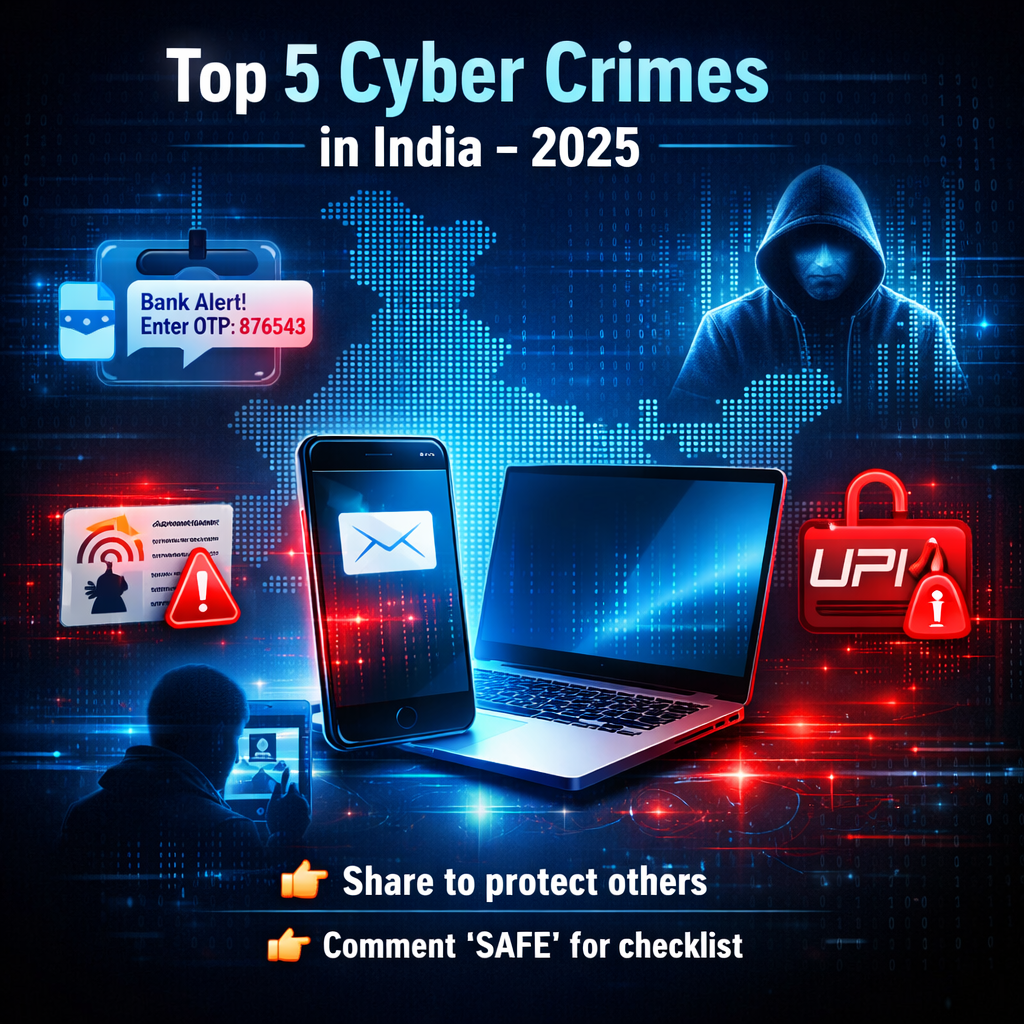
India’s digital life is moving faster than ever—UPI payments, online banking, shopping apps, social media, cloud storage, and work-from-home tools are now part of everyday routine. While this convenience saves time, it has also created new opportunities for cyber criminals.
In 2025, cyber crime is less about technical hacking and more about psychological manipulation. Most frauds succeed because users are rushed, confused, or unaware. A single click, OTP share, or wrong approval can lead to financial loss or account takeover.
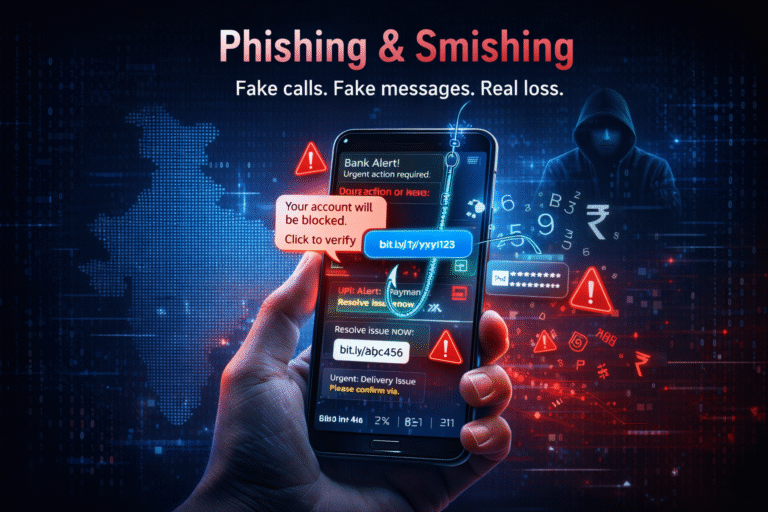
1) Phishing & Smishing (Fake Messages That Look Real)
What it is:
Fraud messages sent via SMS, WhatsApp, email, or social media, pretending to be from banks, courier companies, government departments, or popular brands.
Common examples in India:
- Your bank account will be blocked. Update KYC now.
- UPI pending / cashback credited.
- Fake PAN, Aadhaar, or parcel delivery links
These messages create urgency and push users to click fake links that steal passwords, OTPs, or card details.
Why it’s dangerous in 2025:
Scam messages now look highly professional, use realistic websites, and sometimes follow up with convincing phone calls.
Stay safe:
- Don’t click links asking for KYC or urgent action.
- Open bank apps directly.
- Never share OTPs, CVV, or PINs.
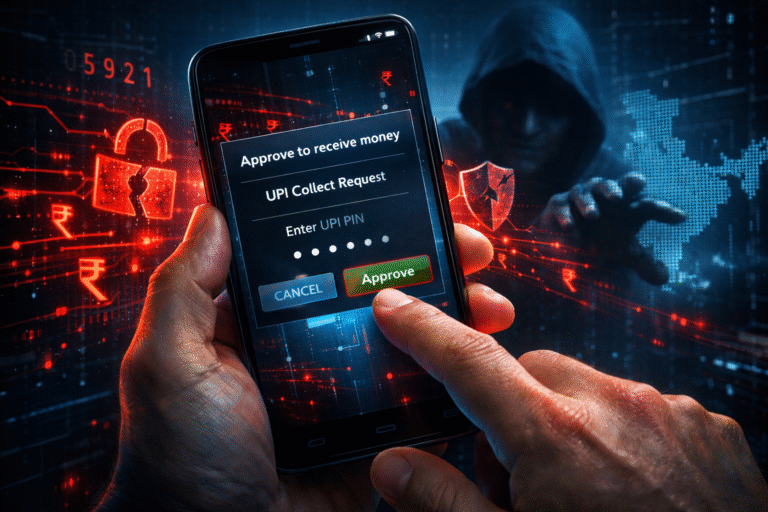
2) UPI & Digital Payment Fraud
What it is:
Scams that misuse UPI features like collect requests, QR codes, fake support calls, or payment confirmation tricks.
Common scams:
- Accept request to receive money” (you actually pay).
- Scan QR for refund.
- Fake customer care asking you to approve transactions.
Why it’s dangerous:
UPI transactions are instant. One wrong tap can move money immediately.
Stay safe:
- To receive money, you never need to enter a UPI PIN.
- Be cautious with collect requests.
- Don’t scan unknown QR codes.
Businesses should verify payments inside the app.
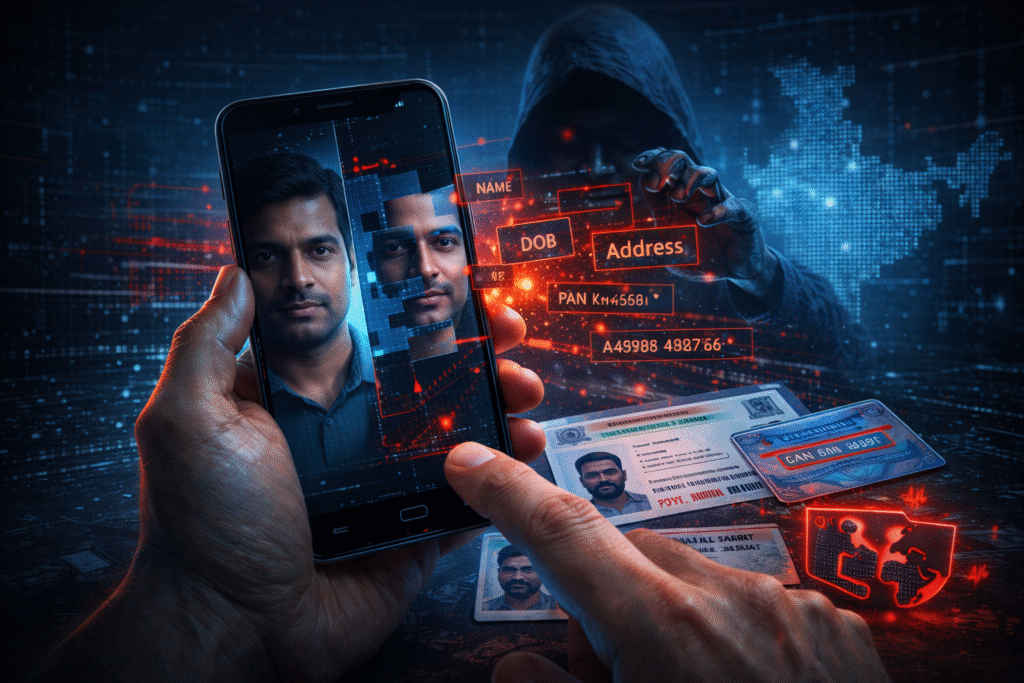
3) Identity Theft & KYC Misuse
What it is:
Criminals misuse Aadhaar, PAN, phone numbers, or personal details to open accounts, take loans, or perform SIM swaps.
How data is stolen:
- Fake job forms and KYC pages
- Fraud calls
- Data leaks
- Oversharing on social media
Impact on victims:
- Unauthorized loans
- Account takeovers
- Legal and financial stress
Why it’s serious in 2025:
Criminals combine leaked data with AI-generated documents, making fraud harder to detect.
Stay safe:
- Share Aadhaar/PAN only when required.
- Use masked Aadhaar when possible.
- Enable multi-factor authentication.
- Avoid posting personal documents online.
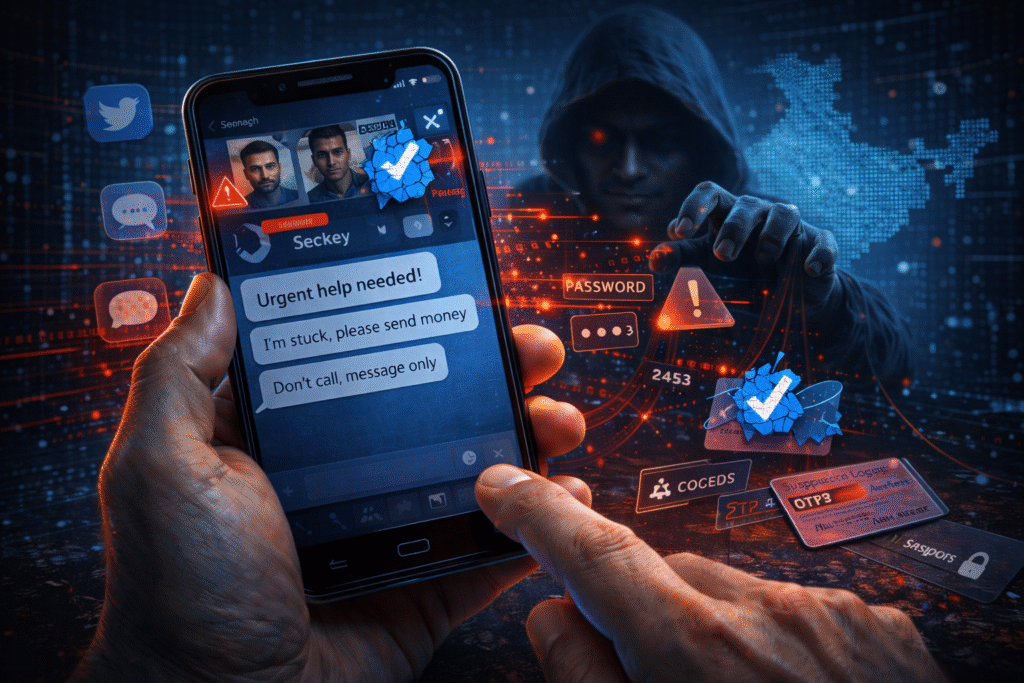
4) Social Media Account Takeover & Impersonation
What it is:
Hackers gain access to Instagram, Facebook, WhatsApp, email, or business pages and use them to scam contacts.
Common tactics:
- Fake “account disabled” warnings
- OTP sharing tricks
- Malicious links like “see your photo”
- Impersonating you to ask contacts for money
Why it matters:
For professionals and businesses, a hacked account can damage reputation and customer trust.
Stay safe:
- Enable 2-factor authentication everywhere.
- Never share OTPs.
- Review login alerts and remove unknown devices.
- Keep backup admins for business pages.
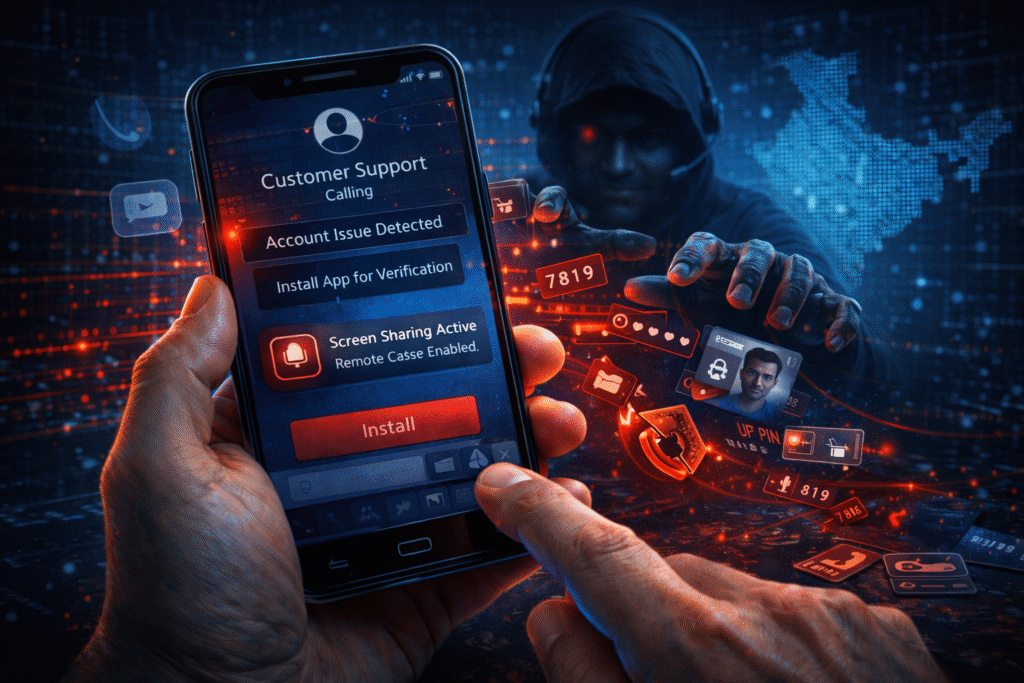
5) Remote Access & Fake Customer Care Scams
What it is:
Fraudsters pose as bank, UPI, telecom, or ecommerce support and ask victims to install remote access or screen-sharing apps.
How it happens:
- Victim calls a fake support number
- Asked to install an app
- Criminal controls the phone and transfers money
Why it works:
The scam feels like real support, especially when users are stressed about refunds or account issues.
Stay safe:
- Never install remote access apps on request.
- Use support numbers only from official apps or websites.
- End calls asking for OTPs, PINs, or screen access.
A Simple Cyber Safety Checklist
- Pause before clicking—urgency is a red flag.
- Lock your phone and update apps regularly.
- OTP is private; UPI PIN is only for sending money.
- Verify suspicious messages, even from known contacts.
- Report fraud quickly to banks and cyber crime portals.
Final Thoughts
Cyber crime in India in 2025 is driven by human behavior, not just technology. Criminals exploit trust, fear, and urgency. Awareness is your strongest defense.
If this article helped you, share it with your family or team. One informed person can prevent multiple losses.
What cyber scam have you seen most commonly in your circle this year?
Share in the comments—your experience might protect someone else.