
When you’re building a startup, legal rules usually sit at the bottom of your priority list.
You’re chasing users, investors, growth, and survival. Compliance feels like something “we’ll handle later.”
But here’s the uncomfortable truth most founders learn too late:
One careless mistake can cost more than your entire startup is worth.
Under India’s new data protection laws, penalties can go as high as ₹250 Crore — and no, this isn’t only for big tech companies.
If your startup has a website, an app, a lead form, or even collects emails, you are already on the radar.
This guide isn’t legal jargon.
It’s a survival conversation.
Stop Assuming “We’re Too Small to Be Noticed”

This mindset kills startups.
The law doesn’t check:
How many employees you have
Whether you raised funding
Whether you’re profitable
It checks what data you collect and how you protect it.
If your startup:
Collects names, phone numbers, emails
Runs ads and captures leads
Uses payment gateways or analytics tools
Then legally, you’re responsible for that data.
And yes, even a small leak or misuse can trigger penalties.
If You’re Collecting Data, Be Honest About It
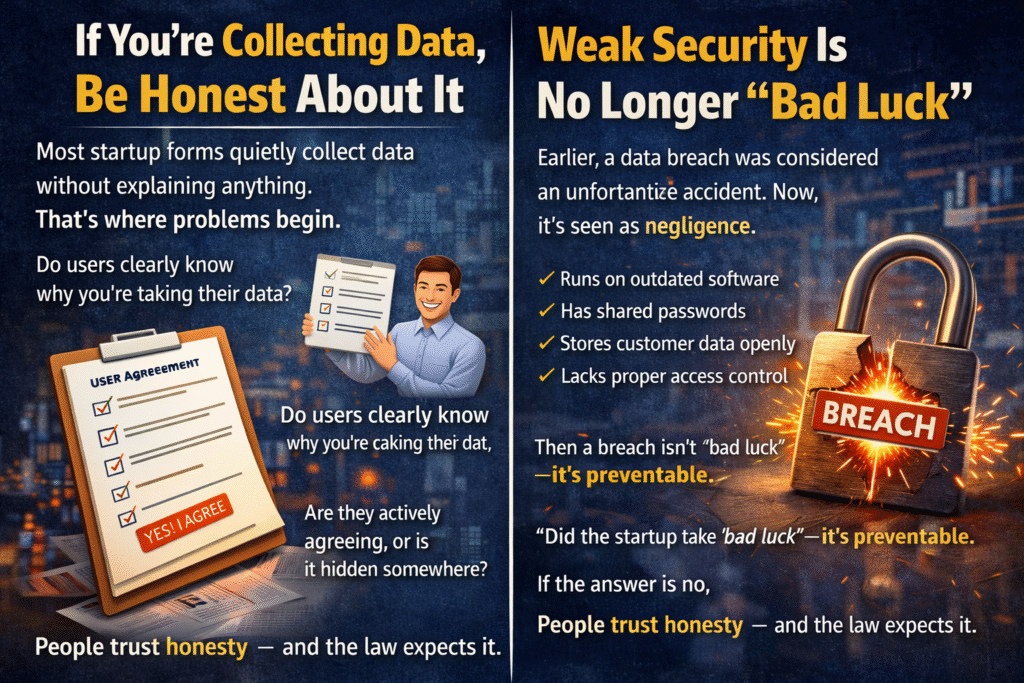
Most startup forms quietly collect data without explaining anything.
That’s where problems begin.
Ask yourself:
Do users clearly know why you’re taking their data?
Are they actively agreeing, or is it hidden somewhere?
A real human approach is simple:
Tell users what you’re collecting, why, and how long you’ll keep it.
No fancy legal words.
No tricks.
People trust honesty — and the law expects it.
Weak Security Is No Longer “Bad Luck”
Earlier, a data breach was considered an unfortunate accident.
Now, it’s seen as negligence.
If your website or app:
Runs on outdated software
Has shared passwords
Stores customer data openly
Lacks proper access control
Then a breach isn’t “bad luck” — it’s preventable.
And when data leaks, the first question asked is:
“Did the startup take reasonable precautions?”
If the answer is no, penalties follow.
Your Tools Can Get You in Trouble Too
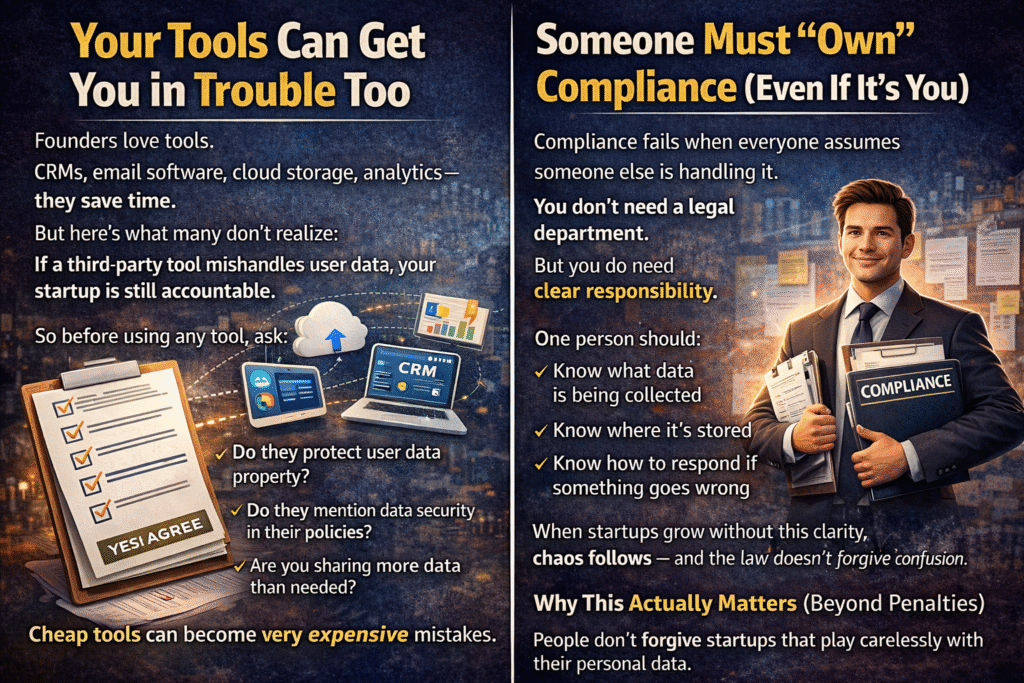
Founders love tools.
CRMs, email software, cloud storage, analytics — they save time.
But here’s what many don’t realize:
If a third-party tool mishandles user data, your startup is still accountable.
So before using any tool, ask:
Do they protect user data properly?
Do they mention data security in their policies?
Are you sharing more data than needed?
Cheap tools can become very expensive mistakes.
Someone Must “Own” Compliance (Even If It’s You)
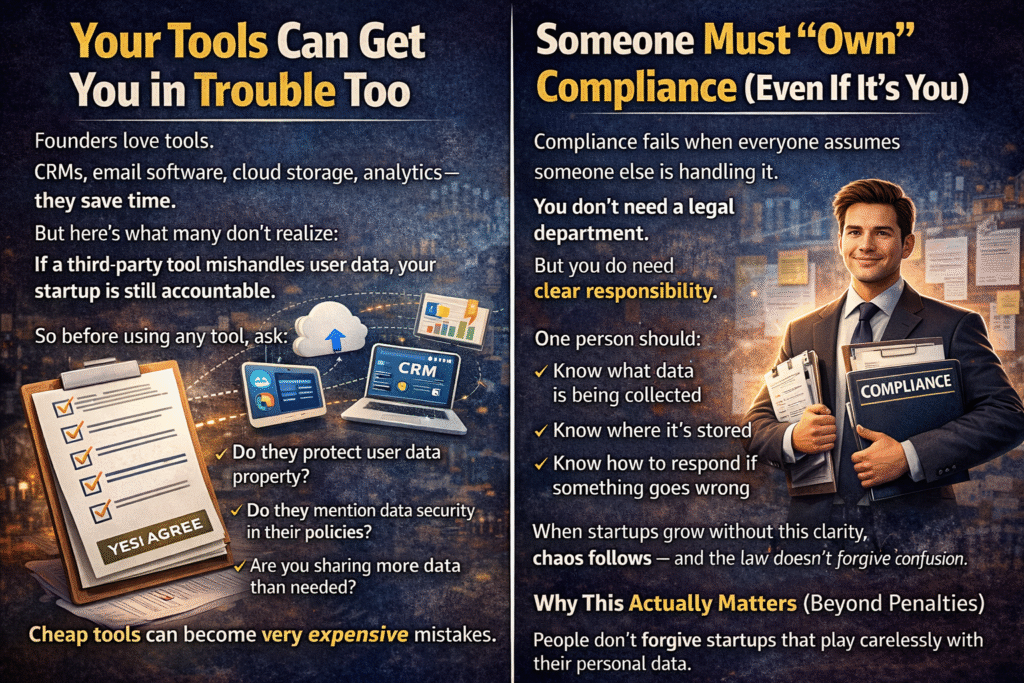
Compliance fails when everyone assumes someone else is handling it.
You don’t need a legal department.
But you do need clear responsibility.
One person should:
Know what data is being collected
Know where it’s stored
Know how to respond if something goes wrong
When startups grow without this clarity, chaos follows — and the law doesn’t forgive confusion.
Why This Actually Matters (Beyond Penalties)
Yes, ₹250 Crore is terrifying.
But the real damage is:
Loss of customer trust
Investor hesitation
Brand reputation collapse
People don’t forgive startups that play carelessly with their personal data.
The strongest startups today aren’t just fast — they’re responsible.
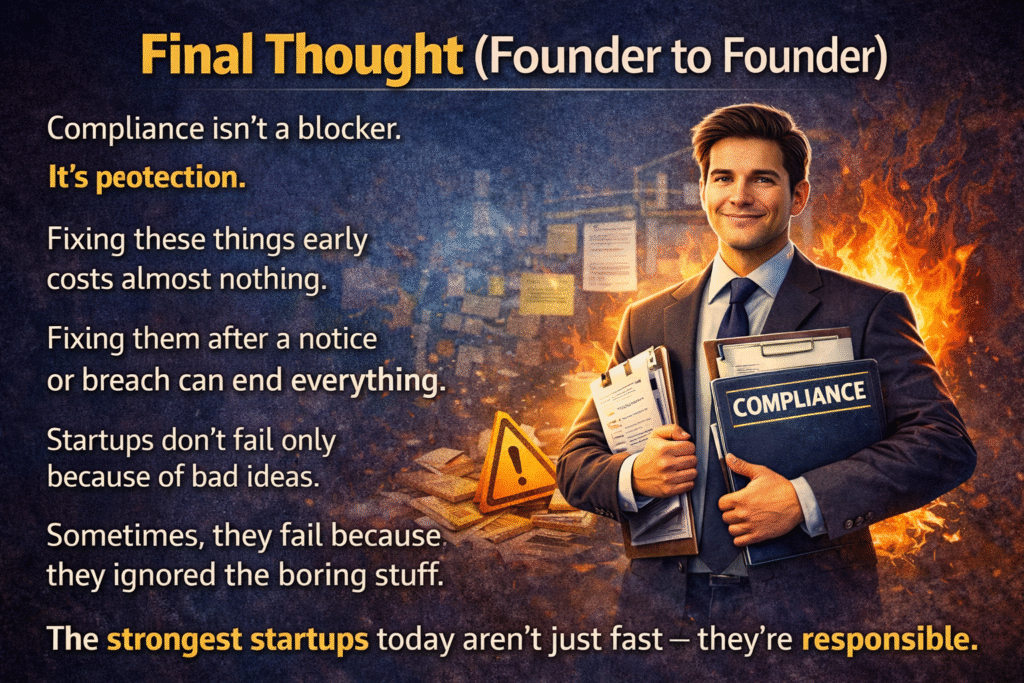
Final Thought (Founder to Founder)
Compliance isn’t a blocker.
It’s protection.
Fixing these things early costs almost nothing.
Fixing them after a notice or breach can end everything.
Startups don’t fail only because of bad ideas.
Sometimes, they fail because they ignored the boring stuff.
And this “boring stuff” is survival.