

Most people treat social media like a casual space.
Photos. Check-ins. Birthday posts. Job updates. Family pictures.
It feels harmless.
But to a cyber criminal, your profile is not just a profile.
It’s a collection of information — and sometimes, an opportunity.
Before attacking, scammers observe.
They look at:
These small details help them answer security questions, guess passwords, or create believable scam messages.
The more open the profile, the easier the job.
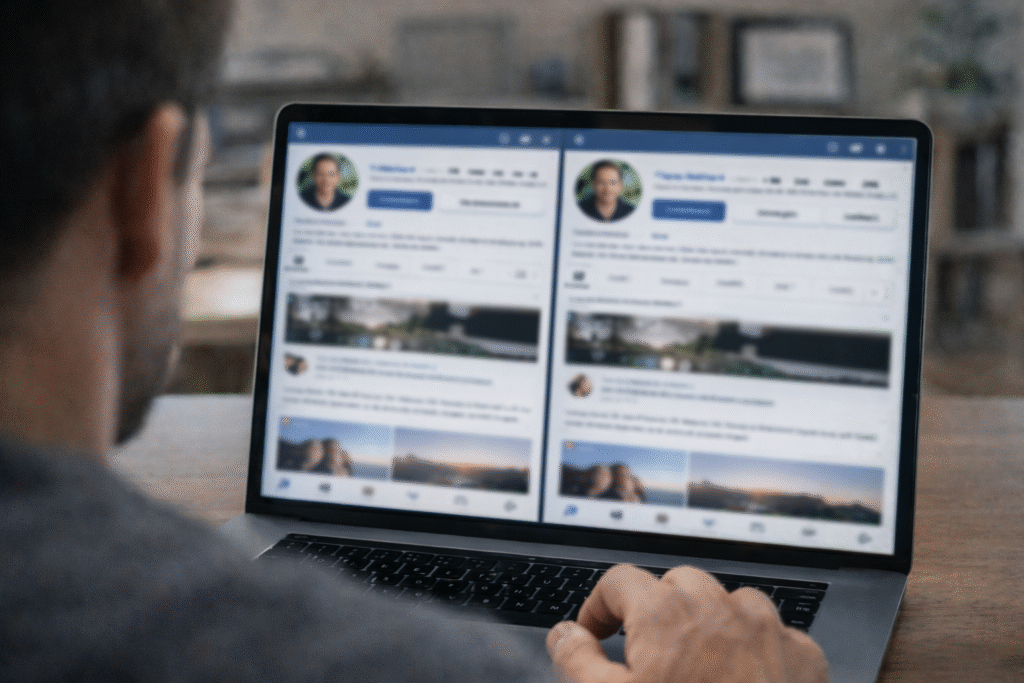
One common method is copying your profile.
Scammers download your profile picture and create a new account with your name. Then they send friend requests to your contacts.
Once connected, they may:
Because the face looks familiar, people trust it.
You may receive a message like:
The link leads to a fake login page.
When victims enter their password, attackers instantly gain access.
Business profiles are often targeted differently.
Cyber criminals:
If business login credentials are stolen, pages can be hijacked and used for fraud.
Sometimes attackers gather old photos or personal posts and use them to threaten victims.
In other cases, they build emotional connections over weeks before asking for money. These scams feel personal because they are designed that way.
Social media platforms encourage sharing.
The problem is not the platform itself.
It’s the amount of information we share publicly.
Attackers don’t always need hacking tools.
Sometimes they just need patience and access to public posts.
You don’t need to quit social media. But you should be careful.
Most cyber attacks succeed because of trust, not technology.
If someone copies or hacks your account:
Quick action can stop further damage.
Your social media profile may look ordinary to you.
But to someone with bad intentions, it’s information.
Cyber attacks today don’t always start with complicated hacking.
Sometimes they start with a simple friend request.
Stay aware. Stay cautious.
A few privacy changes can prevent big problems.