DPDP ACT 2023 SPECIALIZED MASTERCLASS
DPDP Training for Digital Marketers & Growth Teams
This DPDP training for digital marketers shows you how to run compliant ad targeting, pixel tracking, landing page opt-ins, and MarTech workflows under India’s Digital Personal Data Protection Act — while protecting your brand from penalties up to ₹250 Crores.
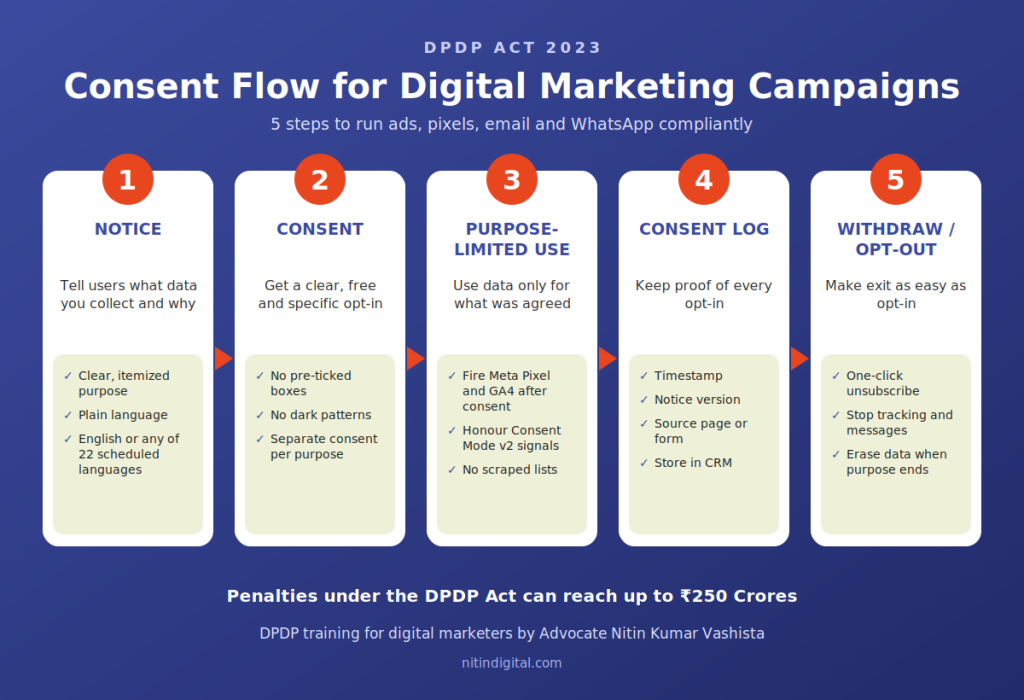
DPDP Consent Flow for Digital Marketers
Why Digital Marketers Need DPDP Training Now
The DPDP Act 2023 changes online marketing in India. For example, silent cookie tracking, pre-ticked opt-in checkboxes, scraped lead databases and untracked ad pixels now expose brands and agencies to penalties of up to ₹250 Crores. Therefore, marketers must understand the law before they launch their next campaign.

Meet Your DPDP Trainer: Adv. Nitin Kumar Vashista
Advocate Nitin Kumar Vashista is a Delhi High Court practicing lawyer and DPDP Act compliance consultant based in Gurugram. He helps digital marketers, agencies and growth teams run ads, pixels, email and WhatsApp campaigns in line with India’s Digital Personal Data Protection Act, 2023. Through his DPDP training for digital marketers, he turns legal requirements into practical campaign checklists.
6-Module DPDP Training Curriculum for Digital Marketers
Designed specifically for marketers, performance media buyers, CMOs, and agency founders — connecting legal requirements to real-world ad campaigns.
DPDP Fundamentals for Marketing
Understand Data Principal, Data Fiduciary, and Data Processor roles in advertising, what qualifies as digital personal data, and notice mandates in 22 languages.
- Fiduciary vs Processor Roles
- Digital Personal Data in Ad-Tech
- Notice in 22 Official Languages
- Consent Managers Architecture
Build high-converting opt-in forms without pre-ticked checkboxes, eliminating banned dark patterns, and logging immutable consent timestamps in CRM systems.
- Compliant Lead Magnets & Forms
- Eliminating Dark Patterns
- Itemized Purpose Clear Notices
- CRM Consent Logging (Hubspot/Zoho)
Legal deployment of Google Consent Mode v2, Meta Pixel, GA4, LinkedIn tags, and server-side tracking (Meta CAPI) without losing marketing attribution.
- Google Consent Mode v2 Setup
- Meta Pixel & GA4 Legal Firing
- Server-Side Tracking (Meta CAPI)
- First-Party Cookieless Strategy
Email, WhatsApp & Outbound Cadences
Navigate WhatsApp Business API promotional messaging rules, scraped email lists, TRAI DLT registration, and frictionless unsubscribe workflows.
- WhatsApp API Marketing Rules
- Scraped B2B Email Liabilities
- DLT & Anti-Spam Harmonisation
- One-Click Opt-Out Workflows
Children’s Privacy & Section 9 Ad Bans
Zero-tolerance statutory framework: absolute ban on tracking, profiling, or targeting individuals under 18 with penalties up to ₹200 Crores.
- Child Definition Under DPDP (<18)
- Prohibition on Behavioral Ads
- Verifiable Parental Consent
- EdTech & Youth Brand Playbook
MarTech Stack Audit & Agency Contracts
Drafting bulletproof Data Processing Agreements (DPA) between clients and agencies, cross-border ad data transfers, and vendor audits.
- Agency-Client DPA Agreements
- MarTech Audits (Klaviyo/Clevertap)
- Cross-Border Ad Data Rules
- Data Retention & Erasure Protocols
Who Should Attend This DPDP Training?
This DPDP training is built for people who run campaigns every day. For example, performance marketers, agency owners, CMOs and growth teams all handle personal data in some form. Moreover, in-house teams using CRMs, email tools and WhatsApp APIs face the same legal duties as large agencies. As a result, every participant leaves with practical checklists instead of legal theory. Therefore, the sessions focus on real campaigns, such as lead forms, pixels and email workflows. Finally, teams can choose onsite or online delivery, depending on their needs.
What You Will Gain from This DPDP Training
After the course, you will be able to audit your own campaigns with confidence. First, you will map every data touchpoint, from lead forms to ad pixels. Next, you will fix consent banners, tracking tags and email workflows so that they match the law. In addition, you will draft clear agreements between your agency and your clients. Consequently, your brand avoids costly penalties while campaigns keep performing. Overall, the result is safer marketing without losing leads.
DPDP Training FAQs for Digital Marketers
DPDP Rules for Campaigns and Training
Can we continue sending promotional WhatsApp broadcasts and cold emails?
Is this DPDP training delivered onsite in Gurgaon/Delhi NCR or online pan-India?
Do we need user consent for Google Ads remarketing and Meta Pixel?
DPDP Legal Basics for Marketers
What is Section 9 of the DPDP Act, and why are marketers terrified of it?
Do agencies and clients need a Data Processing Agreement under the DPDP Act?
What is the difference between a Data Principal, Data Fiduciary and Data Processor?
Book DPDP Training for Your Digital Marketers
Equip your media buyers, growth marketers, and agency team with practical, battle-tested DPDP compliance tools. Book a customized corporate workshop with Advocate Nitin Kumar Vashista today.