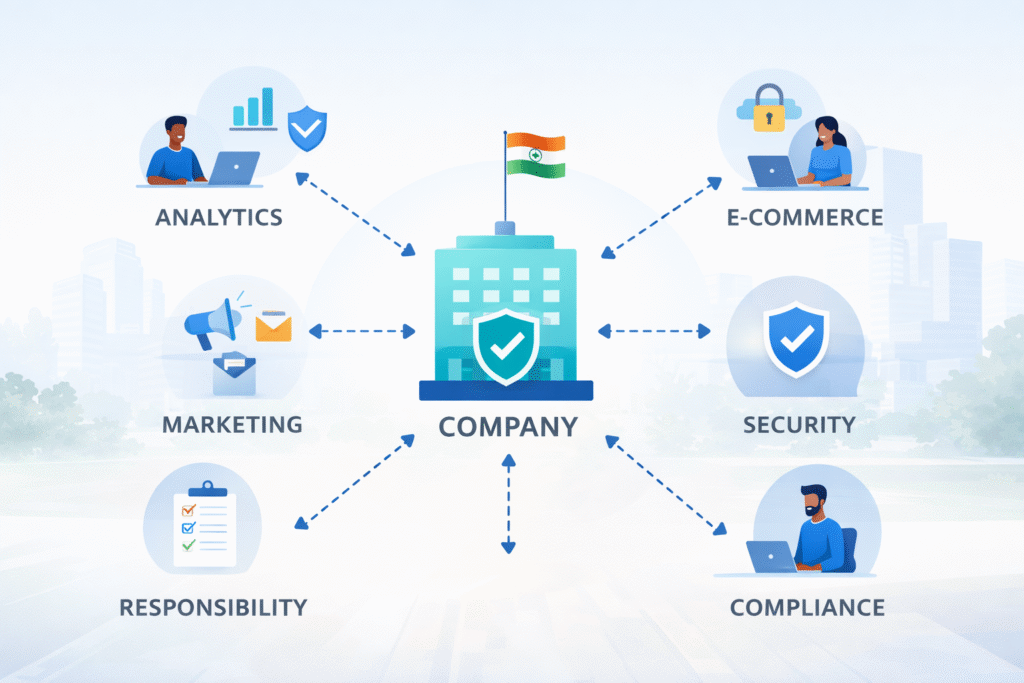
For years, data protection compliance quietly leaned on an unspoken assumption:
“If something goes wrong, our vendor will handle it.”
A cloud provider gets breached.
A CRM leaks customer data.
A marketing tool exposes emails.
The response was almost automatic: this wasn’t us.
The Digital Personal Data Protection (DPDP) Act, 2023 has ended that line of thinking.
India’s new data protection regime introduces a fundamental shift in responsibility, one that many companies, especially startups and digital businesses, are still underestimating.
Under the DPDP Act, accountability cannot be outsourced.
The End of the Vendor Shield

Under older compliance mindsets, companies treated vendors as a convenient buffer between themselves and liability. Contracts were signed, tools were integrated, and responsibility quietly drifted outward.
The DPDP Act pulls that responsibility back.
It clearly establishes that the entity deciding why and how personal data is processed remains responsible for that data throughout its lifecycle. This entity is called the Data Fiduciary.
If you collect personal data from users, customers, employees, or partners and determine its use, you are the Data Fiduciary. It does not matter whether the data is stored on your own servers or handled by ten different third-party platforms.
If a processor slips up, the law looks at you first.
Data Fiduciary vs Data Processor: The Difference That Matters
Understanding this distinction is critical.
A Data Fiduciary:
-
Determines the purpose of data collection
-
Decides how personal data will be used
-
Controls retention, sharing, and deletion
A Data Processor:
-
Processes data strictly on the fiduciary’s instructions
-
Does not independently decide the purpose of processing
Most SaaS tools, hosting providers, CRMs, analytics platforms, and support tools fall into the processor category.
When a processor fails to protect data, the DPDP Act does not treat it as an isolated vendor issue. It treats it as a failure of governance by the Data Fiduciary.
In other words, regulators will ask:
Why did you choose this vendor?
What safeguards did you require?
How did you monitor compliance?
Why This Change Was Necessary
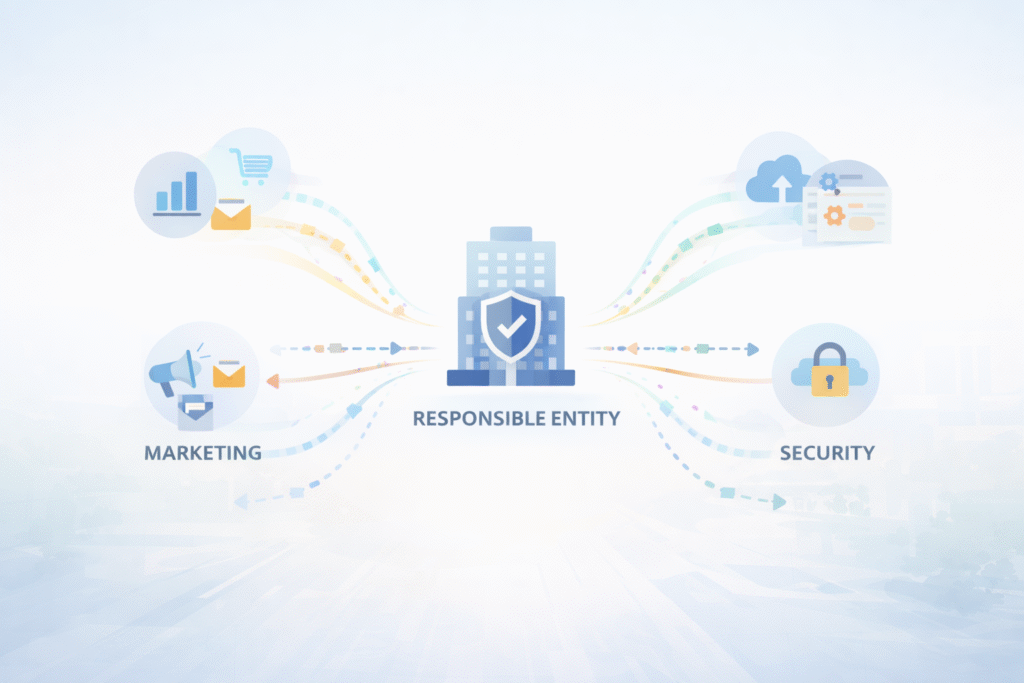
From a regulatory perspective, this shift closes a major accountability gap.
Without it, companies could endlessly pass responsibility down the supply chain while data principals had no meaningful recourse. The DPDP Act reverses that imbalance by ensuring that users always know who is responsible for their data, regardless of how many vendors are involved behind the scenes.
This aligns India’s data protection framework with global standards, where accountability follows control, not convenience.
What This Means for Startups and Growing Businesses
For startups, this change has practical consequences.
Many early-stage companies:
-
Integrate multiple third-party tools quickly
-
Rely heavily on cloud and automation platforms
-
Use vendor privacy policies as a substitute for internal controls
Under the DPDP Act, this approach becomes risky.
You are expected to:
-
Evaluate vendors before sharing personal data
-
Ensure they maintain reasonable security safeguards
-
Clearly define responsibilities through contracts
-
Act swiftly if a vendor incident affects your users
Saying “the breach happened on our vendor’s systems” will not reduce liability.
Vendor Due Diligence Is No Longer Optional
The DPDP Act effectively turns vendor selection into a compliance decision.
Before onboarding any third-party processor, companies should ask:
-
What security standards does the vendor follow?
-
Where is the data stored?
-
How is access controlled?
-
How quickly will incidents be reported?
-
Does the contract clearly reflect DPDP obligations?
Data Processing Agreements are no longer just legal paperwork. They are evidence of accountability.
If a regulator investigates a breach, your contracts, audits, and internal policies will matter just as much as the technical incident itself.

Breach Response: Shared Problem, Single Responsibility
Another important implication of the accountability shift is breach response.
Even if a vendor discovers and reports a breach, the responsibility to:
-
Assess risk
-
Notify authorities (if required)
-
Communicate with affected users
-
Implement corrective measures
still rests with the Data Fiduciary.
This makes coordination with vendors essential. Incident response plans should explicitly include third-party processors, escalation timelines, and communication responsibilities.
Silence or delay can worsen regulatory exposure.
Accountability Is About Control, Not Blame
It’s important to understand that the DPDP Act is not anti-vendor. It does not prohibit outsourcing or discourage modern cloud-based operations.
What it does demand is ownership.
If you benefit from collecting and using personal data, you must also own the responsibility of protecting it, supervising its processing, and respecting user rights.
Accountability under the DPDP Act is not about blame. It is about ensuring that responsibility never disappears into the vendor ecosystem.
Final Takeaway
The DPDP Act introduces a simple but powerful rule:
If you control personal data, you are accountable for it, everywhere it goes.
For businesses, this means shifting from passive compliance to active governance. Vendors can help you operate, scale, and innovate, but they can no longer serve as a shield.
In the DPDP era, responsibility follows decision-making, not delegation.