If your business collects any kind of customer data — names, emails, phone numbers, leads, employee details, app data, or website analytics — the Digital Personal Data Protection (DPDP) Act 2023 directly affects you.
And while many companies panic the moment they hear the word “compliance,” the reality is this:
The DPDP Act isn’t here to complicate your business — it’s here to build trust.
In this blog, we’ll break down the law in simple, practical language so you know exactly what it is, why it matters, and what your company must do to stay compliant. No jargon. No legal confusion. Just clarity.
The Digital Personal Data Protection Act (DPDP Act) is India’s new law that governs how companies collect, use, store, share, and protect personal data.
Think of it as India’s version of GDPR (Europe’s data law), but designed around the needs and realities of Indian businesses.
The purpose of the Act is simple:
Protect people’s personal data
Hold companies accountable for misuse
Create a transparent environment where businesses and customers both feel safe
In a world where cyber fraud, identity theft, and data leaks are constantly in the news, this Act gives India a modern, structured approach to data privacy.
Short answer: Almost every company.
If your business deals with:
Customer data
Website visitors
App users
Employee information
Vendors or partners
…then you’re a Data Fiduciary under this law.
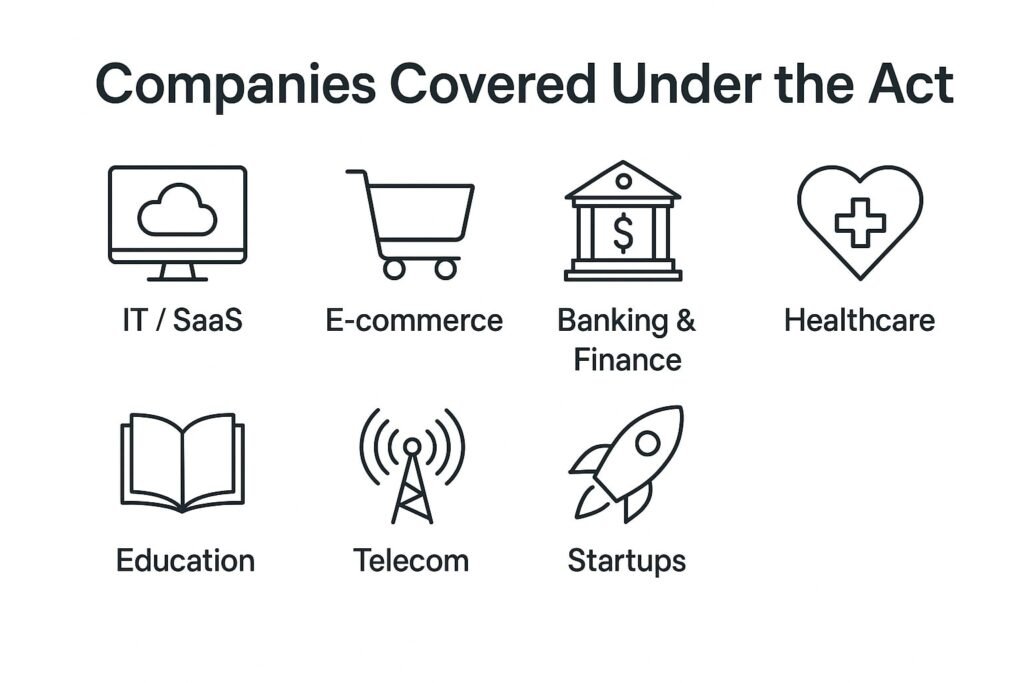
It doesn’t matter whether you are a:
Startup
E-commerce store
SaaS business
Hospital
School
Bank
Digital agency
Manufacturing company
If you collect personal data, you’re included.
Before going deeper, here are the essential terms in normal, everyday English:
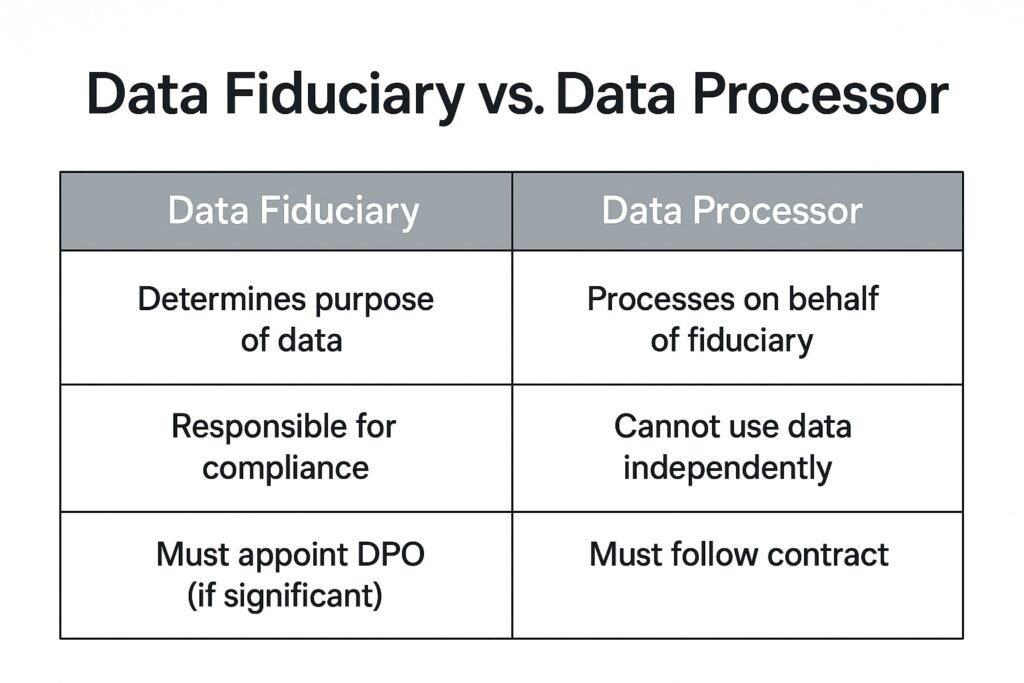
1. Data Fiduciary
That’s you.
Any company or organisation that decides why and how personal data is collected.
2. Data Principal
The person whose data you’re collecting.
Your customer, visitor, employee, or user.
3. Consent
You must clearly ask for permission before collecting personal data.
No more pre-ticked boxes or hidden disclaimers.
4. Significant Data Fiduciary (SDF)
Some companies fall under a stricter category depending on:
Size
Data volume
Risk level
SDFs need additional roles like a Data Protection Officer (DPO).
India is now one of the largest digital economies in the world.
And with digital growth came problems:
Massive data leaks
Spam calls
Unauthorized data sharing
Fraud attacks
Irresponsible handling of customer information
People were losing trust.
Businesses were losing credibility.
The DPDP Act fixes that by ensuring every company follows the same basic rules of privacy, transparency, and security.
The Act is built on a few straightforward ideas:
1. Ask Before You Collect
You must tell users what data you’re taking and why — in clear, everyday language.
2. Collect Only What You Need
Just because you can collect data doesn’t mean you should.
3. Keep Data Safe
Your company must take reasonable security measures to prevent leaks.
4. Delete When Not Needed
Data shouldn’t sit forever.
If it’s no longer required, delete it.
5. Respect User Rights
Users now have the right to:
Know what data you have
Correct it
Delete it
Withdraw consent
And you must respond within a reasonable timeframe.
6. Be Transparent
Your privacy policy must be clear, simple, and accessible.
Here’s where it gets practical.
Below are the actions companies must take — and they are simpler than you might think.
1. Get Clear and Informed Consent
Customers should know:
What data you’re collecting
Why you need it
How long you’ll keep it
Who you may share it with
Consent forms must be:
Transparent
Understandable
Easy to withdraw
2. Build a Solid Privacy Policy
No copy-paste policy.
Your privacy policy must reflect your actual operations.
3. Provide a Data Access & Grievance System
Users should be able to:
Raise complaints
Request corrections
Ask for deletion
You must designate a contact person or system to handle these.
4. Secure Your Systems
This means:
Encryption
Strong passwords
Limited access controls
Regular audits
Secured cloud storage
The Act doesn’t prescribe tools — it only expects “reasonable protection.”
5. Train Your Team
Everyone who deals with data — even interns — must understand the basics of privacy compliance.
6. Do Not Store Unnecessary Data
If you collected data for onboarding or verification, and it’s no longer required, delete it.
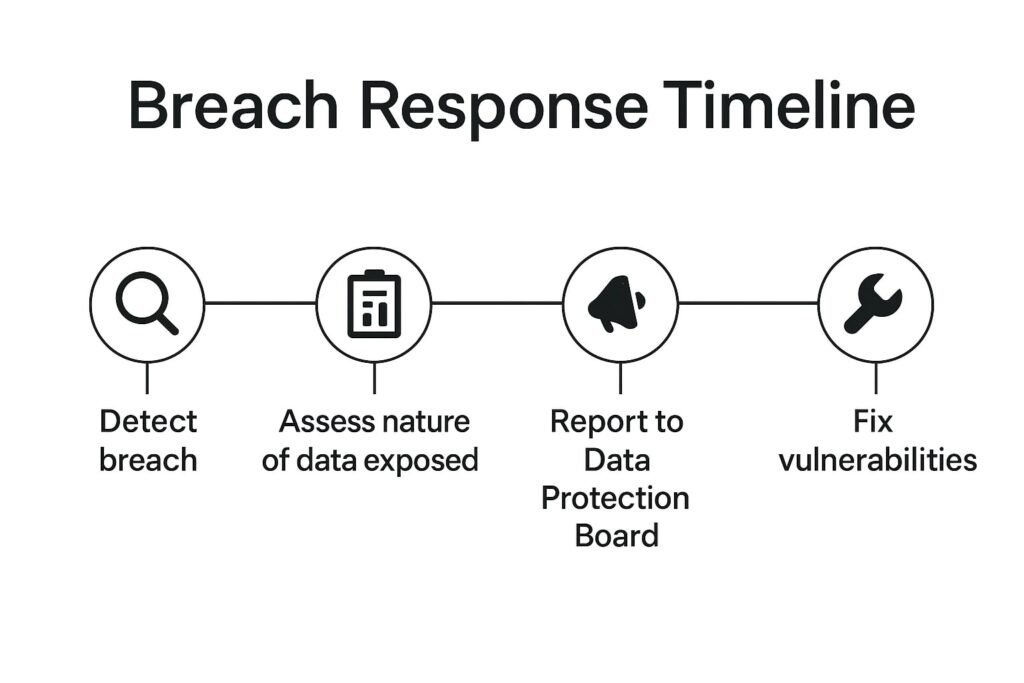
7. Notify Users About Breaches
If there is a data leak, the company must inform:
The users
The Data Protection Board
No hiding breaches.
Some businesses fall under a stricter category based on:
Huge user base
Sensitive data
National importance
They must appoint:
A Data Protection Officer (DPO)
An Independent Data Auditor
This category usually includes:
Banks
Big hospitals
Large tech companies
Social media giants
If you’re a normal business, you likely don’t fall under SDF.
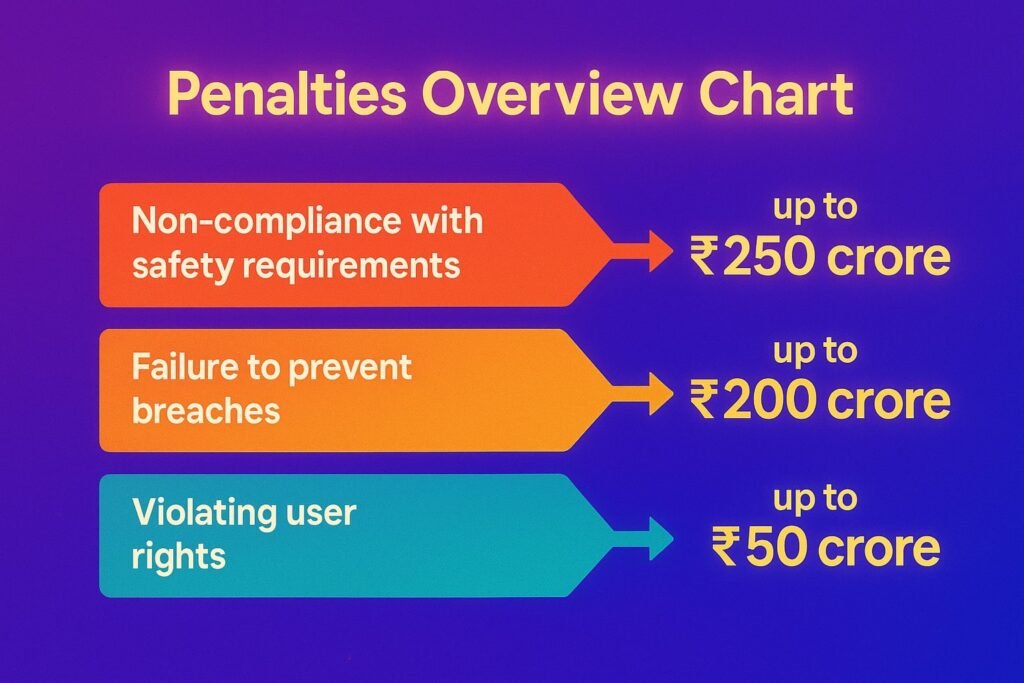
The fines are not small — and they’re designed to make companies take privacy seriously.
Up to ₹250 crore for failing to protect data from breaches
Up to ₹200 crore for violating user rights
Up to ₹50 crore for not fulfilling reporting obligations
The good news?
If you take basic precautions, you’ll rarely run into trouble.
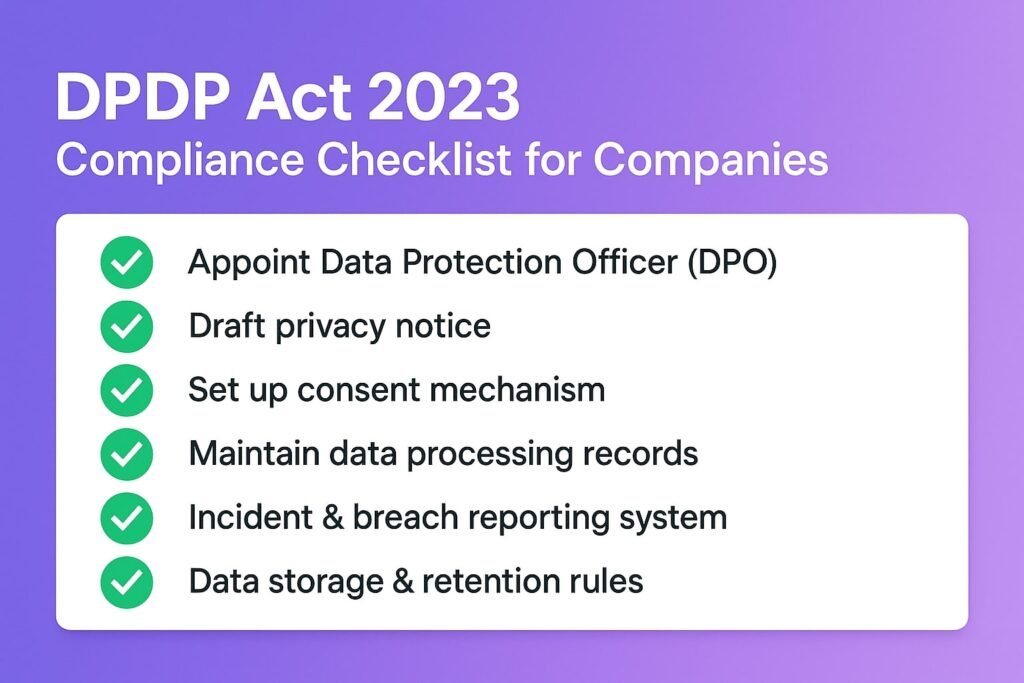
Here’s a quick and practical checklist:
✔ Rewrite your privacy policy clearly
✔ Ask for explicit consent on your website/app
✔ Add a consent withdrawal option
✔ Minimize data collection forms
✔ Encrypt all customer and employee records
✔ Limit internal access to sensitive data
✔ Maintain logs of data usage
✔ Set data deletion timelines
✔ Train your team on data handling
✔ Create a grievance redressal email/system
✔ Conduct an annual security audit
Following these steps puts you ahead of 80% of Indian businesses.
Actually, it’s the opposite.
Companies that follow good data practices:
Build stronger customer trust
Reduce legal risks
Avoid expensive breaches
Improve brand reputation
Attract global clients (many require compliance)
Privacy-conscious companies will stand out — especially as customers become more aware of their rights.
The DPDP Act 2023 is not a burden — it’s a wake-up call for Indian businesses to treat customer data responsibly.
Compliance doesn’t require heavy legal work.
It requires honesty, transparency, and good habits.
If your company focuses on:
Asking permission
Storing data securely
Being transparent
Respecting users
…you’re already aligned with the spirit of the law.
Data privacy is no longer just a legal requirement —
it’s the new language of trust between businesses and customers.