As our dependence on digital platforms grows, so do the risks associated with cyber threats. Two terms that are often used interchangeably—but are fundamentally different—are cyber crime and cyber terrorism. Understanding the distinction between them is essential for professionals, businesses, and policymakers alike.
What is Cyber Crime?
Cyber crime refers to illegal activities carried out using computers, networks, or the internet, primarily for financial gain or personal benefit. The perpetrators are usually individuals or organized groups motivated by money, data theft, or fraud.
Common examples of cyber crime include:
⦁ Online fraud and scams
⦁ Phishing and identity theft
⦁ Ransomware and malware attacks
⦁ Credit card and banking fraud
⦁ Data breaches targeting companies or individuals
Cyber criminals often target weak systems, unaware users, or poorly secured networks. Their goal is not to create fear or disruption on a national level, but to exploit vulnerabilities for profit.
What is Cyber Terrorism?
Cyber terrorism, on the other hand, involves politically or ideologically motivated attacks conducted through digital means. The primary objective is to create fear, panic, or large-scale disruption, often targeting critical infrastructure or government systems.
Examples of cyber terrorism include:
⦁ Attacks on power grids, hospitals, or transportation systems
⦁ Disruption of government or military networks
⦁ Coordinated cyber attacks to destabilize a nation
⦁ Spreading fear through large-scale digital sabotage
Unlike cyber crime, cyber terrorism aims to harm national security, public safety, or social stability rather than generate financial profit
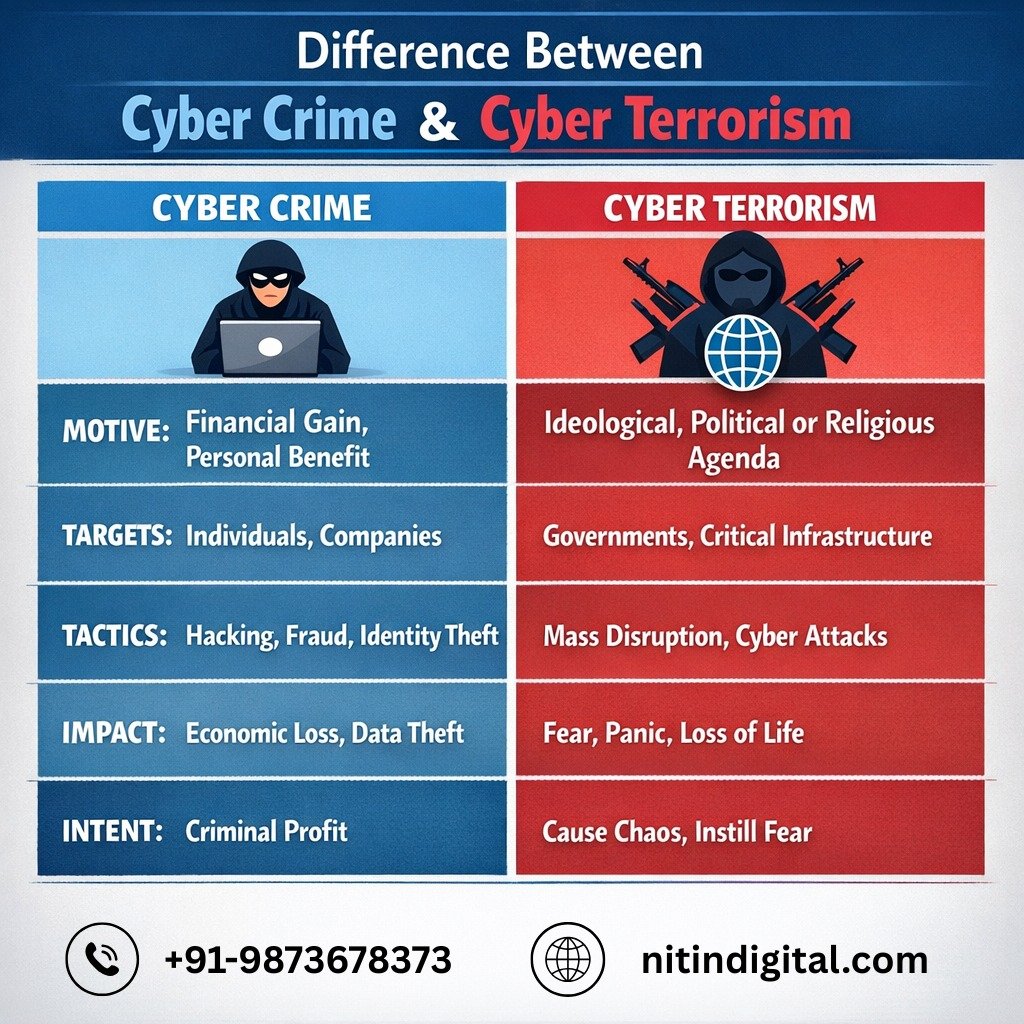
Cyber Crime vs Cyber Terrorism: Key Differences
Primary Motivation:
⦁ Cyber Crime: Driven by financial gain, data theft, or personal benefit
⦁ Cyber Terrorism: Driven by political, ideological, or religious motives
Main Objective:
⦁ Cyber Crime: To steal money, information, or digital assets
⦁ Cyber Terrorism: To create fear, panic, and large-scale disruption
Typical Targets:
⦁ Cyber Crime: Individuals, small businesses, corporations, banks
⦁ Cyber Terrorism: Governments, critical infrastructure, national systems
Impact Level:
⦁ Cyber Crime: Causes financial loss and privacy violations
⦁ Cyber Terrorism: Threatens national security and public safety
Scale of Attack
⦁ Cyber Crime: Usually limited or localized
⦁ Cyber Terrorism: Often large-scale and strategically planned
Why Understanding Cyber Threats Matters Today
Understanding the difference helps organizations and governments respond effectively. Cyber crime typically requires strong cybersecurity practices and legal enforcement, while cyber terrorism demands national-level defense strategies and international cooperation.
For businesses, awareness is the first line of defense. Investing in cybersecurity training, data protection, and risk management is no longer optional—it’s essential.
Final Thought
In today’s connected world, both cyber crime and cyber terrorism pose serious threats, but they differ significantly in intent, impact, and scale. Recognizing these differences allows us to build smarter defenses, protect digital assets, and contribute to a safer online environment.