
Introduction: Health Data Is Not Like Other Data
In healthtech, data isn’t just information. It’s medical history, prescriptions, lab reports, mental health records, diagnostic results — deeply personal details.
Under the Digital Personal Data Protection (DPDP) Act, 2023, health data carries higher responsibility. Many early-stage healthtech startups move fast, build quickly, and focus on product growth — but overlook compliance.
The problem? In healthcare, a privacy mistake isn’t small. It can mean heavy penalties, legal action, and loss of trust.
Let’s break down five common mistakes — and what to do instead.
1. Treating Consent Like a Checkbox
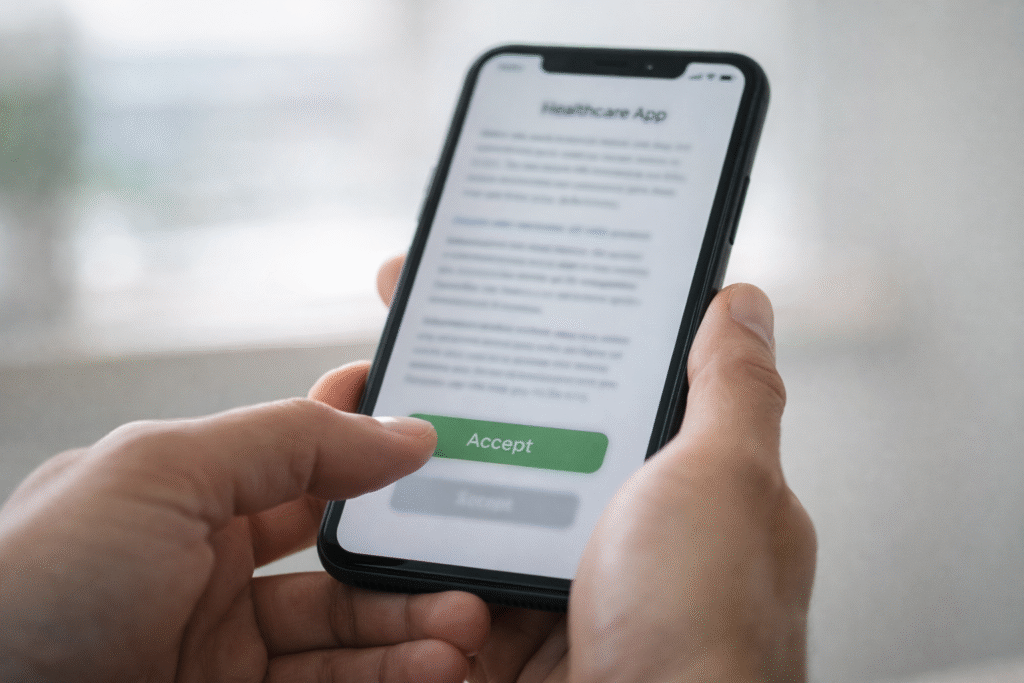
Many startups add a single line:
“By using this app, you agree to our terms.”
That’s not valid consent under DPDP.
The Act requires consent to be:
- Clear
- Specific
- Informed
- Unambiguous
In healthcare, blanket consent is risky because different data types serve different purposes.
How to Fix It:
- Separate consent for treatment, marketing, and research
- Use plain language, not legal jargon
- Allow users to withdraw consent easily
If a patient doesn’t clearly understand what they agreed to, it won’t hold up.
2. Collecting More Data Than Necessary

Healthtech founders often think:
“Let’s collect everything now — we might need it later.”
But under DPDP, you must collect only what is necessary for the purpose stated.
Unnecessary data collection increases:
- Security risk
- Legal exposure
- Breach impact
How to Fix It:
- Audit your data fields
- Remove optional sensitive data unless essential
- Define purpose before collecting any new data
Data minimisation is not just a principle — it’s protection.
3. Ignoring Vendor and Third-Party Risks

Many healthtech apps rely on:
- Cloud providers
- Analytics tools
- CRM systems
- Payment gateways
Even if a vendor causes the breach, your startup remains accountable.
How to Fix It:
- Sign proper data processing agreements
- Verify vendor security practices
- Limit third-party access to only required data
Outsourcing infrastructure does not outsource responsibility.
4. No Clear Data Retention Policy

A common issue in healthtech:
Patient data stays in servers indefinitely.
DPDP requires that personal data not be retained longer than necessary for its purpose.
Keeping old health records without reason creates compliance and security risk.
How to Fix It:
- Define retention timelines clearly
- Automate deletion after purpose is complete
- Inform users about retention periods
If you don’t know why you’re storing data, you shouldn’t be storing it.
5. Weak Internal Access Controls

Many early startups give broad system access to team members for convenience.
But health data requires strict access control.
Internal misuse or accidental leaks are as serious as external breaches.
How to Fix It:
- Apply role-based access control
- Track system logs regularly
- Enable two-factor authentication for admin accounts
Access should be based on role — not trust alone.
Why Healthtech Startups Are Under Extra Scrutiny
Health data is sensitive by nature. A breach doesn’t just cause financial loss — it damages patient trust permanently.
Investors, hospitals, and enterprise partners increasingly ask:
- Is your platform DPDP compliant?
- How do you protect patient data?
- What is your breach response plan?
Compliance is becoming a business advantage, not just a legal requirement.
Final Thoughts
Many founders see compliance as a slowdown.
In reality, early compliance:
- Builds trust
- Reduces future legal costsPrepares you for scaling
Attracts serious investors
Healthtech startups that embed privacy into their systems from day one won’t struggle later.
The DPDP Act isn’t meant to block innovation — it’s meant to protect people.
And in healthcare, protection should always come first.